
La Llorona, Lindsay Clancy and the Question We Don't Ask Mothers Soon Enough
By Ana Cruz - Founder & Chief Editor
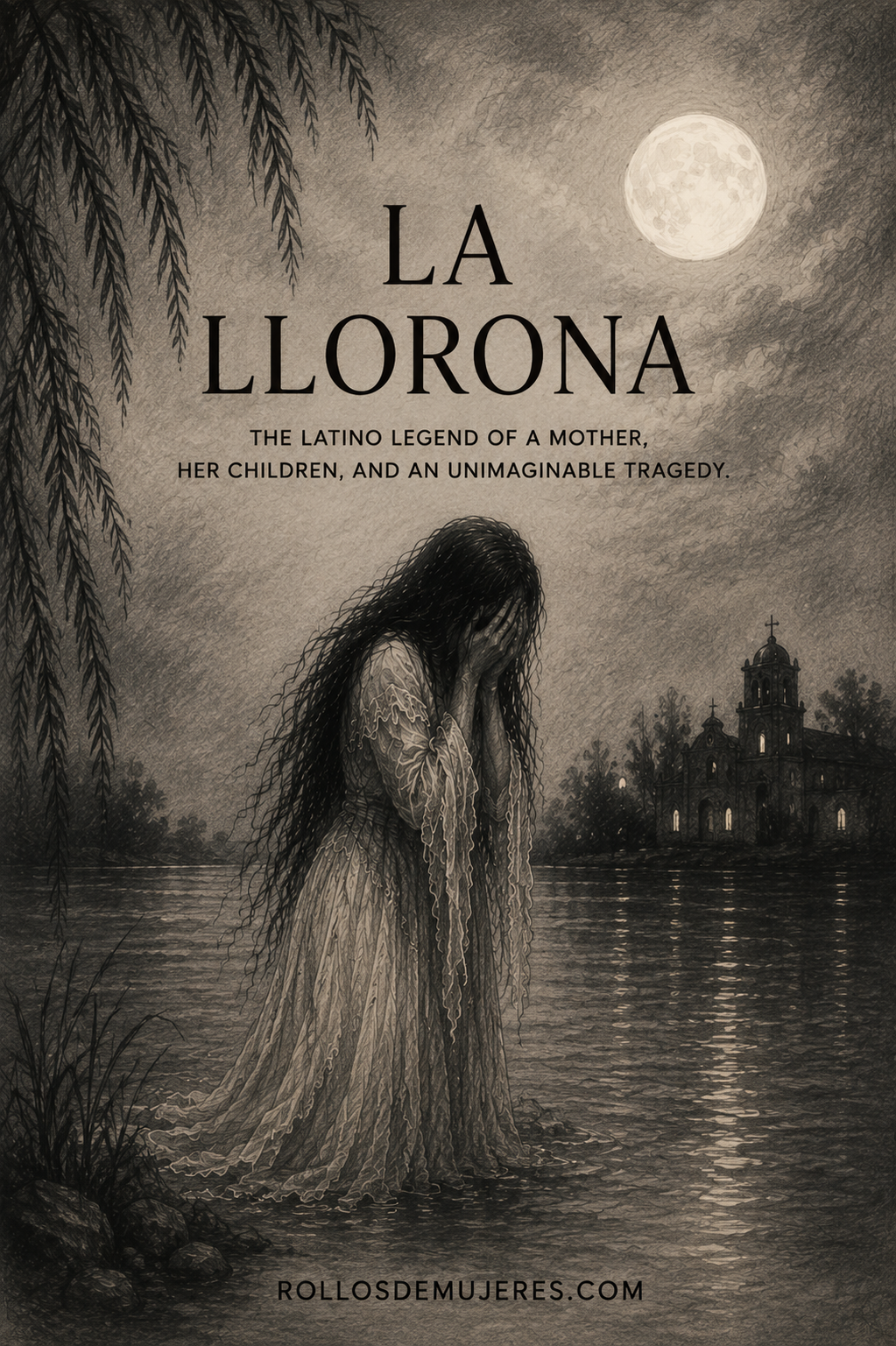
Growing up in Mexico, I heard the story of La Llorona more times than I can remember.
My mother told it. My grandmother told it. And like generations of Mexican children before me, I listened.
No salgas porque te va a llevar La Llorona.
Don't go outside at night because La Llorona might take you.
As a little girl, it was terrifying.
As a mother, I hear the story very differently.
And watching the Lindsay Clancy trial has made me think about that woman crying beside the river in a way I never expected.
The Story Mexican Children Grow Up Hearing
La Llorona, or The Weeping Woman, is one of the most enduring legends in Mexican and Latin American culture. There are countless versions of the story, passed orally from one generation to the next throughout Mexico, Latin America and the American Southwest. The Smithsonian describes the familiar figure as a heartbroken woman who drowned her children and is condemned to wander near rivers searching for them.
The version I grew up hearing was about a beautiful woman named María who falls in love with a wealthy man and has children with him.
Eventually, he abandons her for another woman.
Consumed by heartbreak, anger and desperation, María takes her children to the river and drowns them.
Almost immediately, she realizes what she has done.
Overcome with grief, she spends eternity searching for the children she can never bring back, crying into the darkness:
“¡Ay, mis hijos!”
And so she becomes La Llorona.
We were told the story partly to frighten us into behaving. But it was also something more intimate: an oral tradition passed de generación en generación, changing slightly with every grandmother, mother or aunt who retold it.
When I was a child, I heard a ghost story.
Today, I hear a story about a mother.
Then Came the Lindsay Clancy Case
In January 2023, Massachusetts mother and labor and delivery nurse Lindsay Clancy killed her three young children, Cora, Dawson and Callan. Her defense does not dispute that she caused their deaths. The central question in her ongoing murder trial is whether she was legally responsible for her actions at the time.
Her attorneys argue that Clancy was suffering from severe mental illness, including postpartum psychosis, and therefore was not criminally responsible. Prosecutors have challenged that account and argue that her behavior demonstrates she understood what she was doing. Expert witnesses on both sides have offered sharply different interpretations of her mental state. As of August 26, 2026, the case remains before the court.
I don't pretend to know what happened inside Lindsay Clancy's mind that day. That determination belongs to the evidence, the experts and ultimately the jury. But watching this case has made me deeply sad.
It has also made me think about motherhood, mental health and La Llorona through the experiences of my own life, because I know something about what happens when motherhood collides with trauma.
Listen to my conversation with Dr. Josef Witt-Doering in this episode of my podcast.
When Motherhood and Trauma Collide
I have experienced infidelity, abandonment, and postpartum depression during my first marriage, just like “La Llorona”. Even during the darkest periods of my life, I never thought about hurting my baby. That distinction matters.
Postpartum depression is not postpartum psychosis, and experiencing depression, trauma, betrayal, anxiety, or exhaustion does not mean a mother is going to harm her baby. Postpartum psychosis is a separate, rare, and serious psychiatric condition that can involve hallucinations, delusions, paranoia, and severe confusion. It requires immediate medical attention.
But I can also admit something women do not always feel comfortable saying out loud: motherhood can break you down in ways you never imagined. There were periods of my life when simply getting through another day required strength I was not sure I had.
What helped me enormously was having my mother close. I had family, love, and support. And somewhere inside me, I had that resiliencia that has followed me since I was a little girl.
Years later, when I became a mother for the second time, the trauma came from somewhere completely different. My baby was fighting for his life.
Eleven Days on ECMO
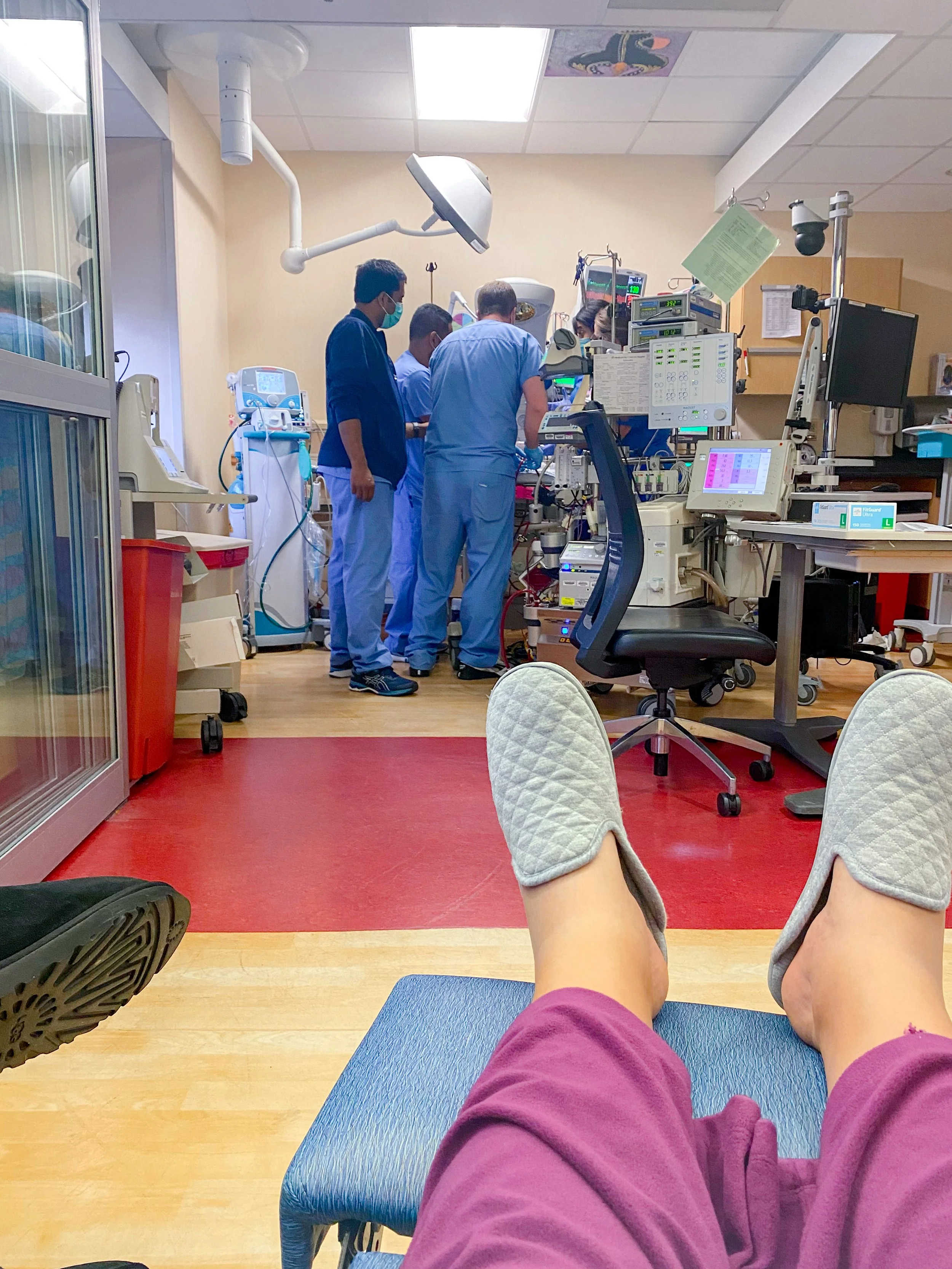
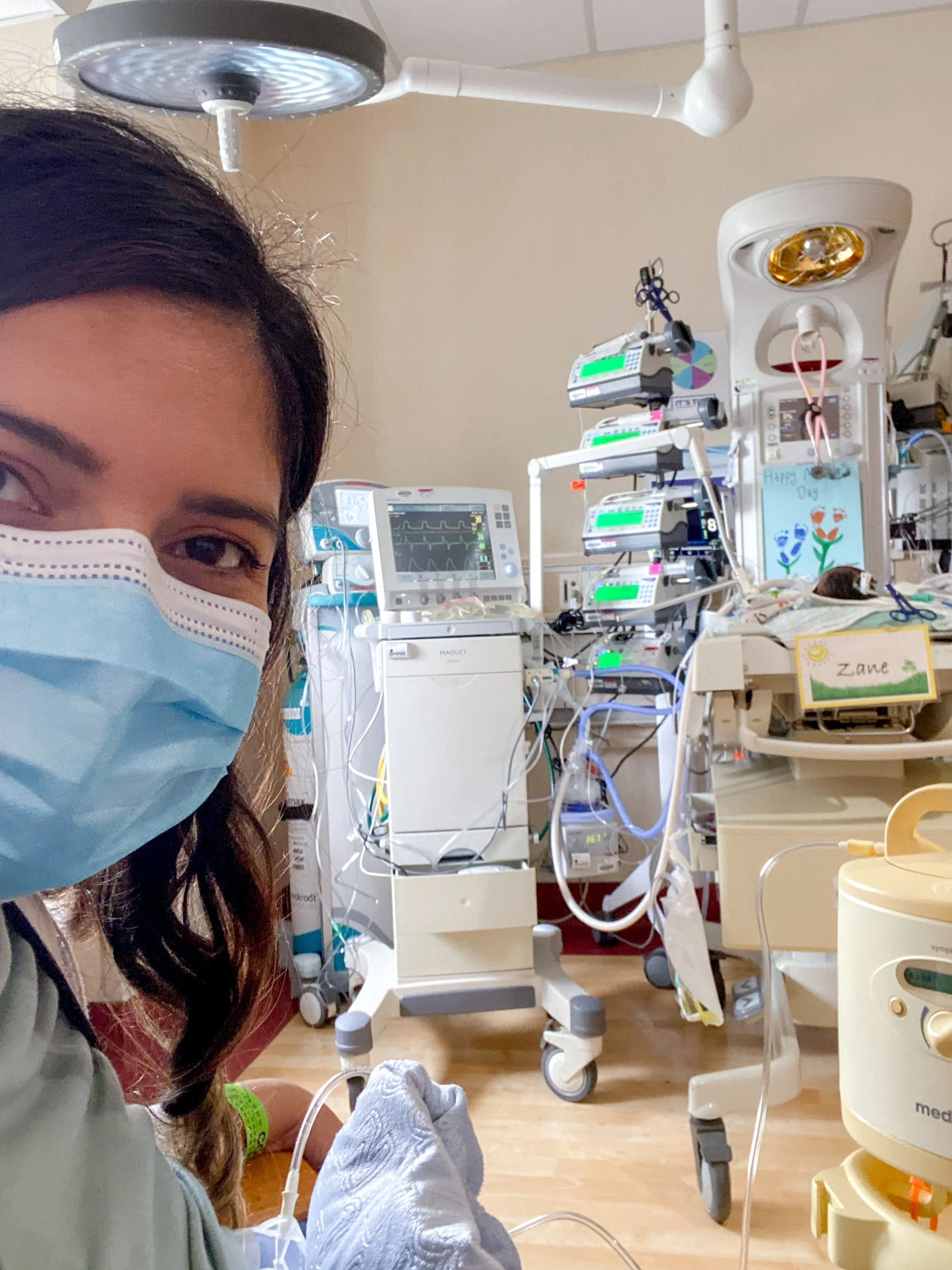
From the moment my second son was born, our world became about survival. He was placed on ECMO, an advanced form of artificial life support that temporarily takes over the work of the heart and lungs when they cannot function adequately on their own. For 11 days, that machine helped keep my baby alive.
Then came approximately three more months in the PICU and NICU. There was no traditional postpartum recovery for me, no peaceful period at home learning the rhythm of life with a newborn. Every second seemed to carry another question: Would my baby survive? Would today bring good news? Would the next phone call change everything?
There were days when my hands shook, days when I felt like I might faint, and days when I cried without being able to explain exactly why. Fear, exhaustion, and uncertainty took over my body.
And then, finally, we brought our baby home. That should have been the ending.
It wasn’t.
When Mom Becomes the Nurse
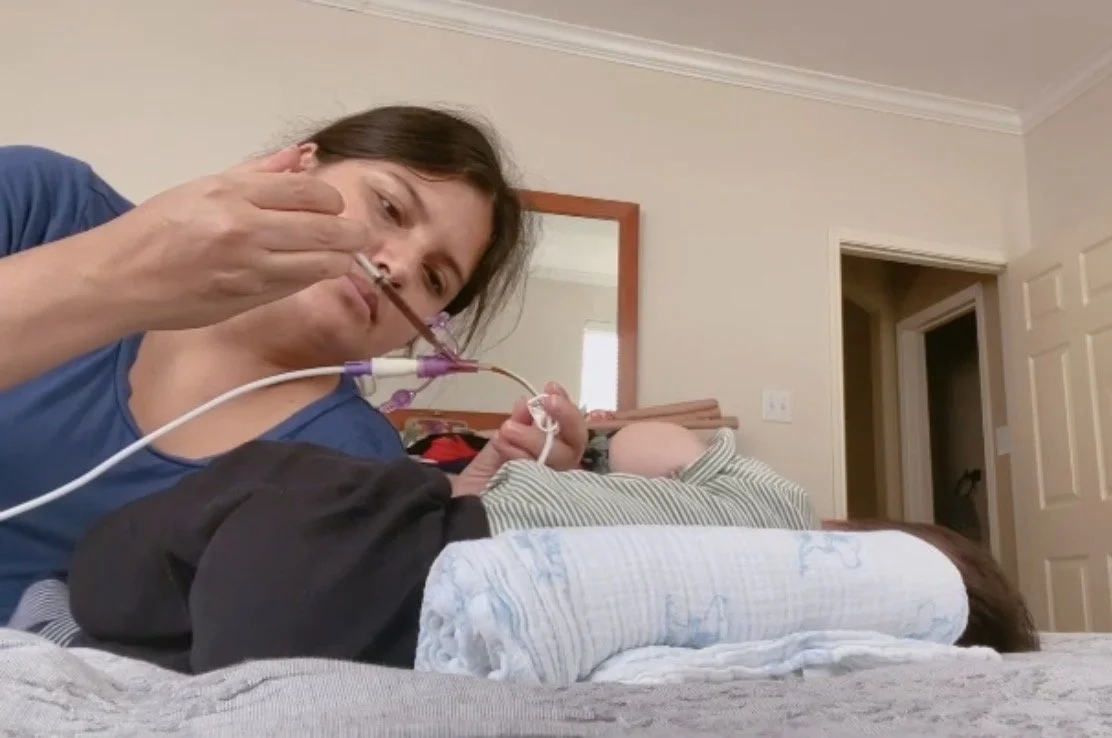
Once we were home, my husband and I essentially became our son’s nurses. I learned how to sterilize medical equipment, care for his G-tube, feed him through it, and follow medication schedules where forgetting a dose was not an option. Sometimes medications had to be given every hour and a half, and uninterrupted sleep disappeared.
At the same time, I was still a mother to my older son, a teenager who needed me too. There were therapy appointments several times a week, doctor visits, equipment, feeding schedules, medication schedules, and constant concerns about our baby’s development. And, I had a full time job too!
You don’t stop to ask whether you can handle it. You handle it because your child needs you. No hay de otra.
Then one day, we went to see his pediatric surgeon and everything looked good. Eventually, his G-tube was removed, and the surgeon released us from his care.
We had made it. My baby was okay.
And strangely, that was when my body seemed to finally understand everything it had survived.
My Baby Was Okay. I Wasn't.
For months afterward, I cried without always knowing why. I gained around 40 pounds, my obsessive tendencies became stronger, and I experienced brain fog. I was over reacting with everything related to my kids health and I wanted to control the most minimum detail of it. My body no longer seemed to respond the way it once had.
For so long, I had been functioning in survival mode. There was always one more medication to administer, another appointment to attend, another medical decision to make, another night to get through.
Then suddenly, the emergency was over. But my body didn’t seem to know it.
In my own situation, I chose not to use medication, but yes, therapy and medication was offered to me. With time, support, and the stability that came from watching my son grow stronger, I slowly began finding myself again. That was my personal experience, not a recommendation for what another mother should do. Treatment for postpartum mental health conditions is deeply individual and should be discussed with qualified healthcare professionals.
What I learned is that sometimes the crisis ends long before a mother’s body and mind have finished living through it.
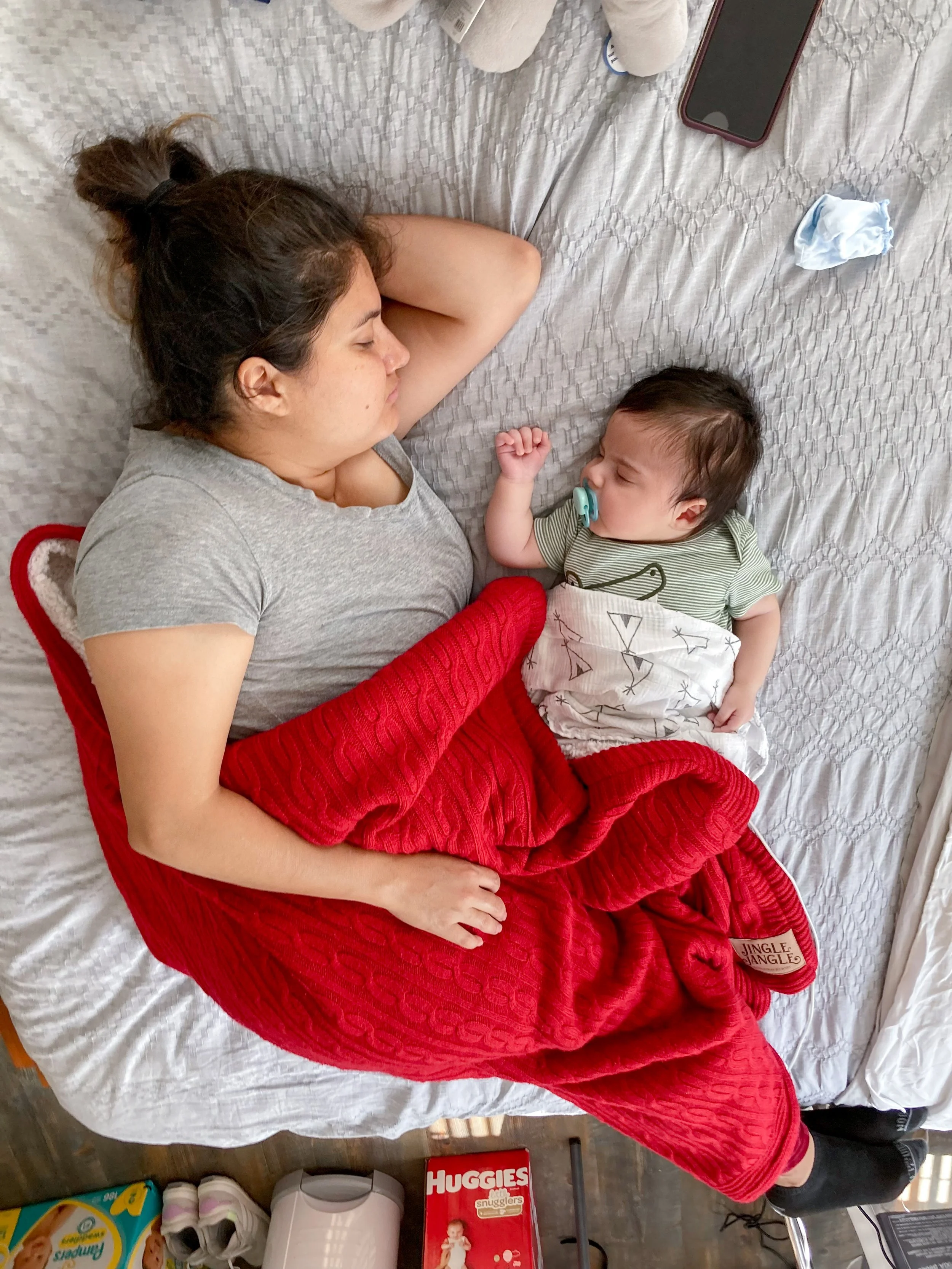
What Were Our Grandmothers Really Telling Us?
The Lindsay Clancy case made me return to the story of La Llorona with an entirely different question. Not because I believe the legend explains a modern criminal case. It doesn’t. Not because postpartum depression inevitably leads to violence. It doesn’t. And certainly not because every struggling mother is dangerous. She isn’t.
My question is something else: What if some of the stories women passed down for centuries contained conversations about maternal suffering that our ancestors did not yet have the language to describe?
What if beneath the supernatural story of La Llorona there was also a story about grief, isolation, abandonment, rage, or a woman pushed beyond what her mind could endure?
We cannot know for certain. The origins of La Llorona are complex, with many interpretations across Mexican and Latin American history. Some traditions connect her to pre-Hispanic figures, others to La Malinche, and others to entirely different women and places.
But folklore often survives because it touches something people recognize. Generation after generation, mothers kept telling this story.
And now I wonder why.
Motherhood Can Be Beautiful and Brutal
We love celebrating the beautiful parts of motherhood: the maternity photos, the tiny clothes, the first smiles, the Mother’s Day flowers.
What we talk about far less comfortably is what can happen to a woman’s body and mind after childbirth. The hormonal changes. The sleep deprivation. The isolation. The fear. The loss of identity. The pressure. And the expectation that because the baby is healthy, the mother should immediately be okay too.
Sometimes she isn’t.
Sometimes everyone celebrates the end of the baby’s crisis while the mother is only beginning to process what happened.
My son survived, and today, when I look at him, I feel an enormous amount of gratitude. But I also feel compassion for the woman I was during those months: the mother running on almost no sleep, terrified of losing her child, and desperately trying to hold everything together.
Esa mujer también necesitaba cuidado.
That woman needed care, too.
La Llorona Doesn't Scare Me the Same Way Anymore
I don’t know what the jury will ultimately decide about Lindsay Clancy or which interpretation of her mental state they will accept. Those questions belong in the courtroom.
But this case has left me thinking about something much larger than one woman, one trial, or one tragedy.
For generations, we have told little girls the story of a woman wandering through the darkness, crying for the children she lost. Maybe as adults, instead of only teaching children to fear La Llorona, we should ask another question:
“Who was taking care of the mother before she began to cry?”
And today, when a mother tells us she is overwhelmed, terrified, depressed, disconnected, exhausted, or simply that something inside her doesn’t feel right, are we really listening? Are we asking enough questions? Are we surrounding her with support? Are we treating the mother as someone who deserves care too?
Because maybe the lesson isn’t only about fearing La Llorona.
Maybe it is about making sure another mother never has to walk through her darkest night alone.
Join the Conversation
Motherhood has beautiful stories, but it also has stories we do not talk about enough.
Did you grow up hearing the legend of La Llorona? Has becoming a mother changed the way you understand it? I would love to hear your thoughts. Share your experience in the comments, and send this article to another woman who may connect with this conversation.
For a deeper discussion about the Lindsay Clancy case, psychiatric medications, and women’s mental health, watch my interview with psychiatrist and former FDA medical officer Dr. Josef Witt-Doerring on The Ana Cruz Show.
Subscribe to The Ana Cruz Show on YouTube, Spotify, and Apple Podcasts, and follow @anacruzshow on Instagram and TikTok so you do not miss the next conversation.
If you or someone you know is experiencing symptoms of postpartum psychosis, such as hallucinations, delusions, paranoia, or severe confusion, seek immediate medical help. Postpartum psychosis is considered a psychiatric emergency.