
The Gray-Haired Heroes: A Reflection from the Desert Shield and Desert Storm Memorial Dedication in Washington, D.C.
More than 35 years after the Gulf War, veterans and their families gathered in the nation's capital to witness the dedication of a memorial honoring their service and sacrifice. Among them was my father-in-law, Ron, whose stories reminded me that behind every military operation are thousands of personal experiences that deserve to be remembered.
By Ana Cruz Hollingsworth | Founder and Chief Editor
WASHINGTON, D.C. — October 26, 2026
Some journeys take us to new places. Others teach us something far more meaningful than we ever expected.
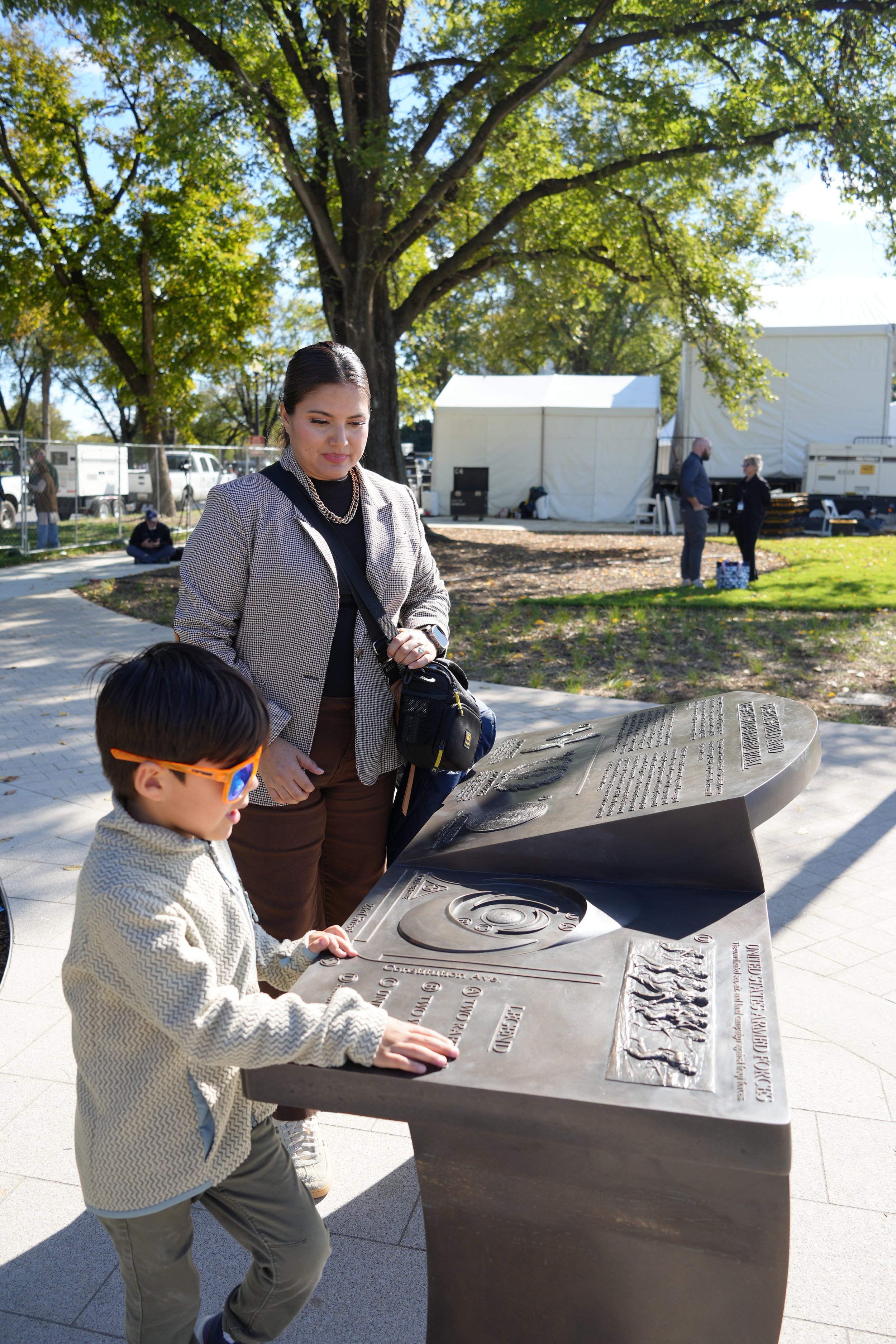
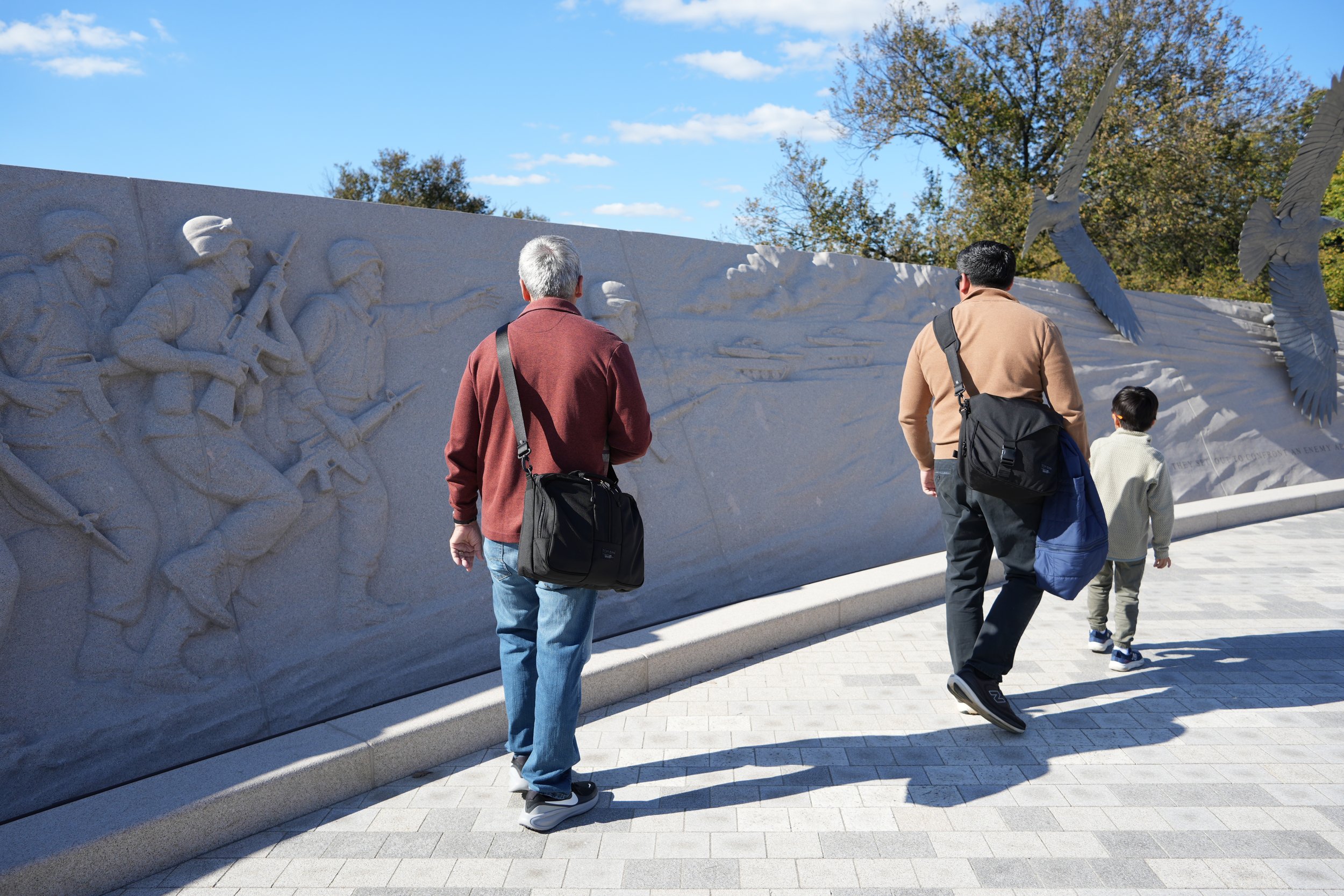
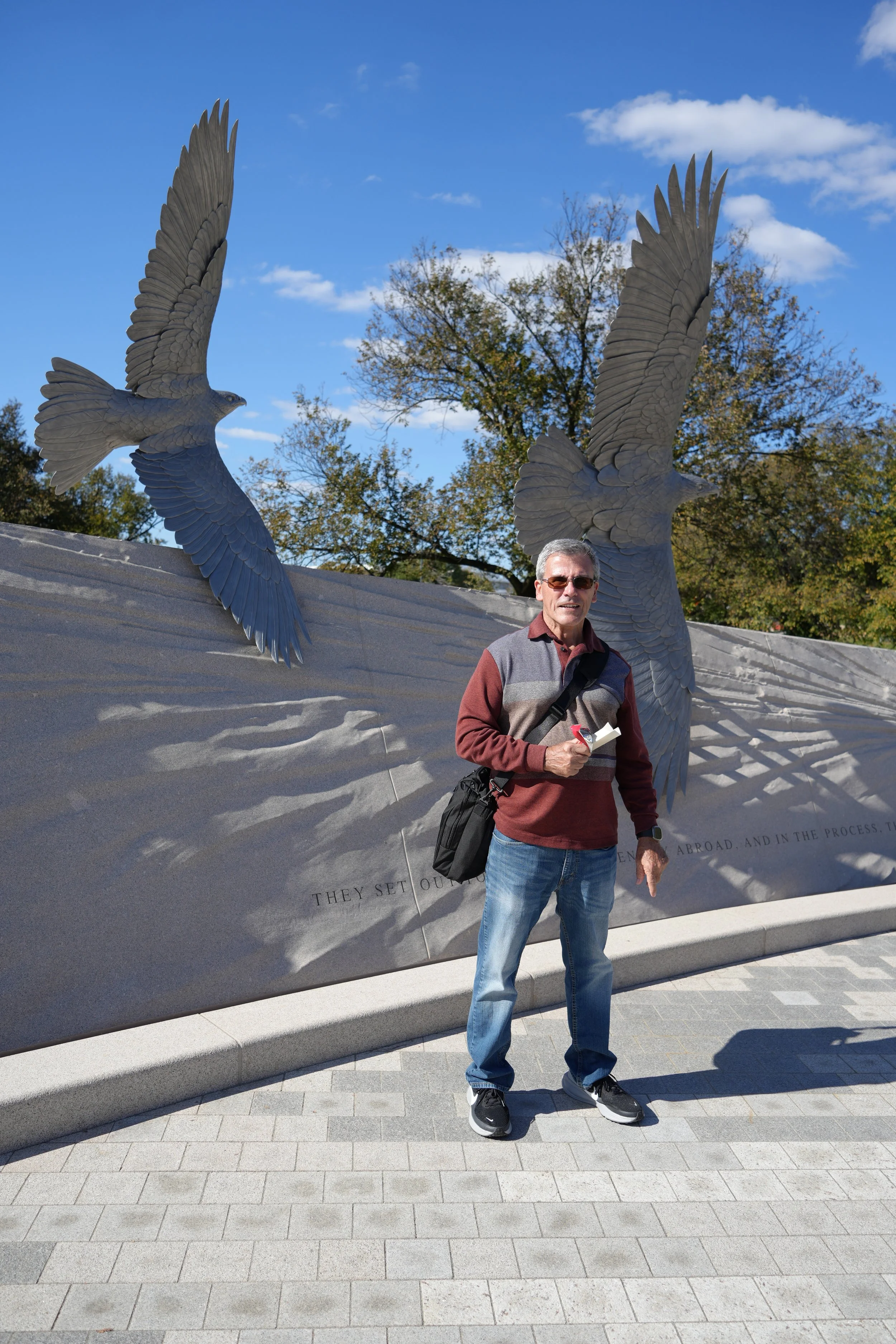
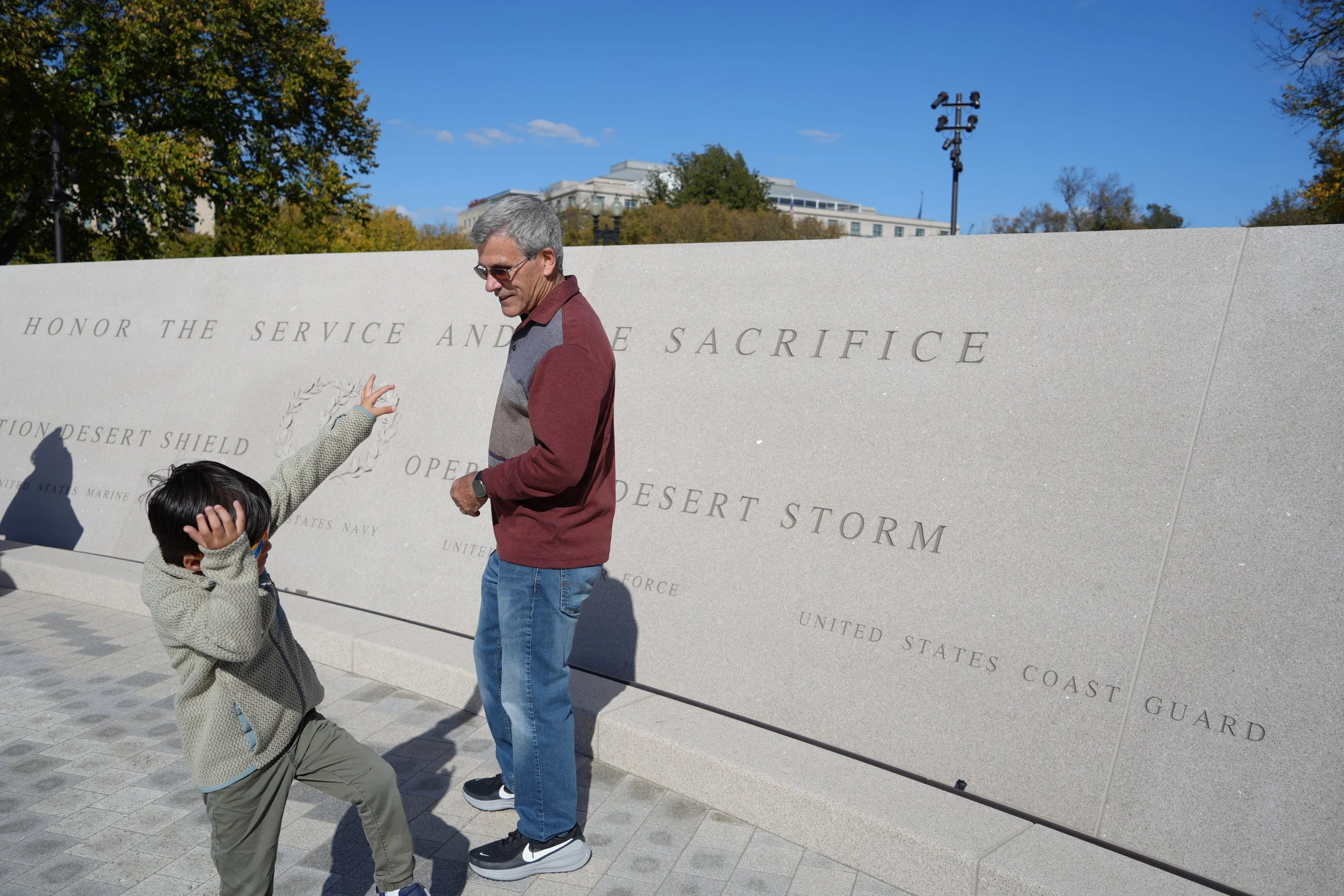
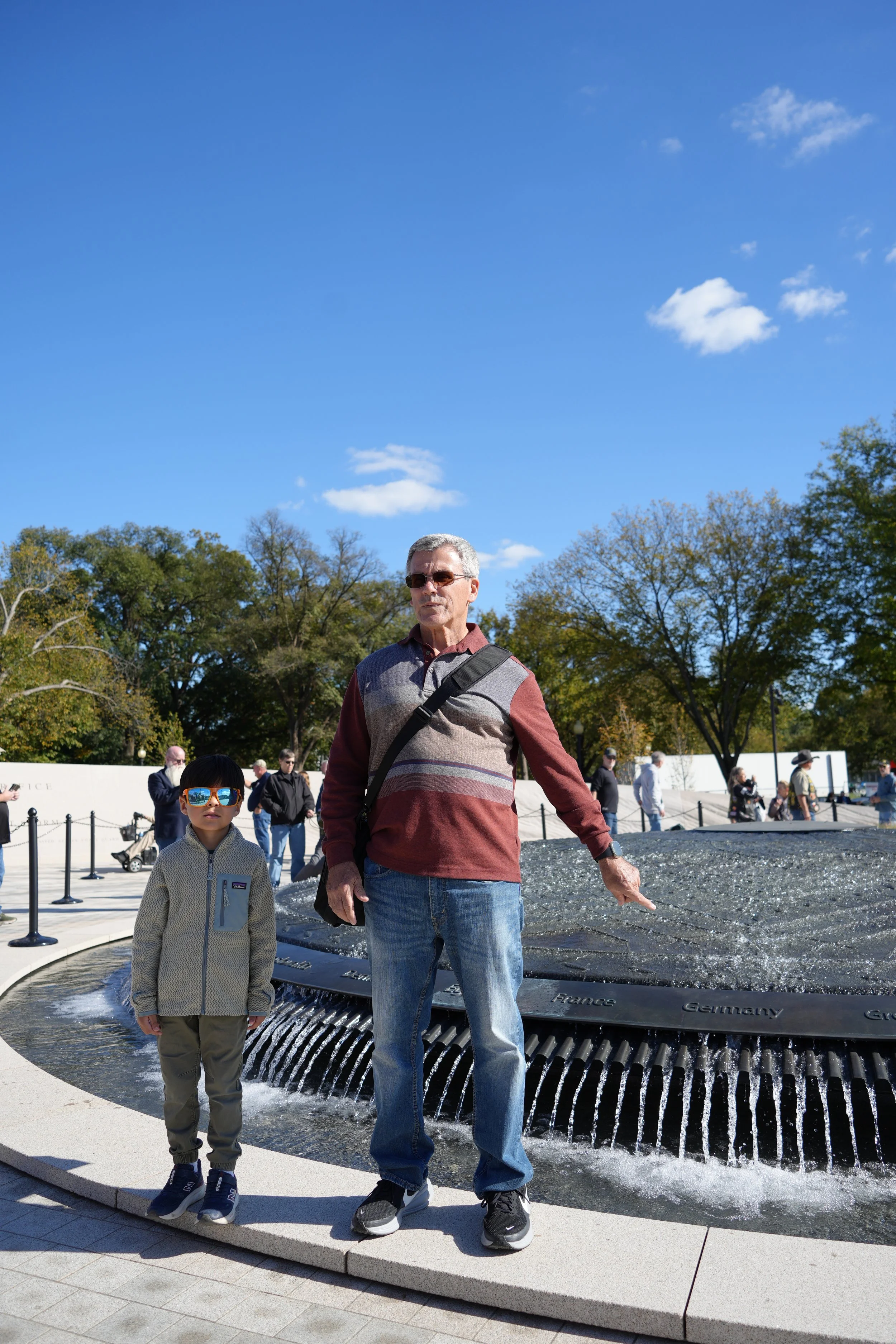
This past weekend, my family and I traveled to Washington, D.C., to accompany my father-in-law, Ron, a Gulf War veteran, to the dedication of the National Desert Storm and Desert Shield Memorial, held on Saturday, October 24, 2026.
What began as a family trip to celebrate a historic milestone became an experience that left me reflecting deeply on respect, remembrance, sacrifice, and how younger generations understand the history that came before them.
A Memorial More Than Three Decades in the Making
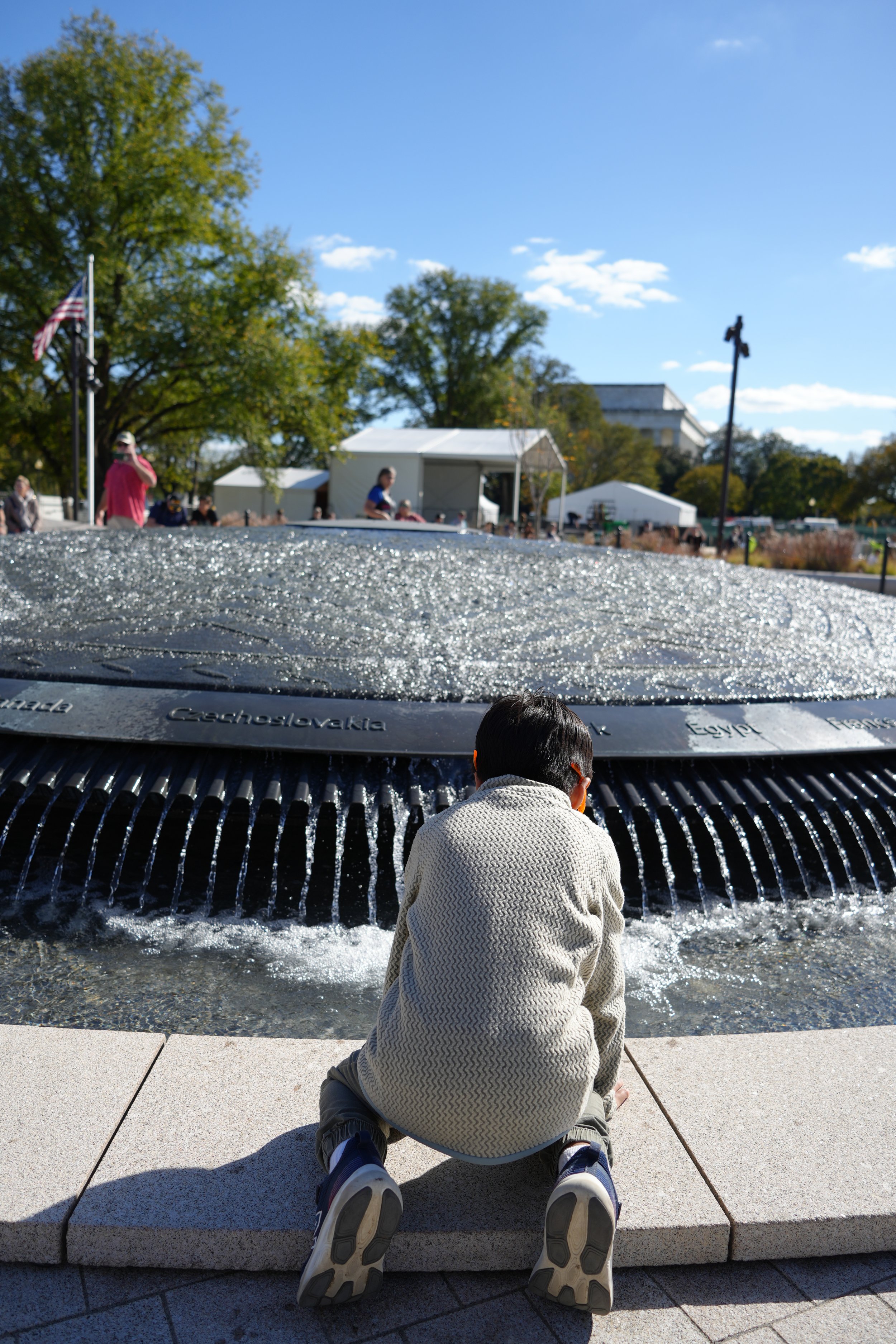
Located along Constitution Avenue NW near 23rd Street, just steps from the Lincoln Memorial and the Vietnam Veterans Memorial, the new National Desert Storm and Desert Shield Memorial honors the service members who participated in Operations Desert Shield and Desert Storm between 1990 and 1991.
Following Iraq's invasion of Kuwait in August 1990, the United States launched Operation Desert Shield to help protect Saudi Arabia and prevent further aggression. Months later, an international coalition led by the United States initiated Operation Desert Storm, ultimately liberating Kuwait in February 1991.
Approximately 700,000 American service members deployed in support of the operations.
The memorial recognizes their service and sacrifice while commemorating the international coalition that came together during the conflict.
But beyond its architecture and historical significance, what moved me most that Saturday was not the monument itself. It was the people who had traveled so far to see it. Hundreds of veterans and family members arrived from across the United States and even other parts of the world to witness a moment many had waited decades to experience.
Some proudly wore military caps. Others displayed medals, commemorative jackets, American flags, and insignias representing their units and service.
Every piece of clothing seemed to tell a story. And behind every story was a family.
Two Different Spaces, One Shared History
One of the first things that caught my attention when we arrived was how the ceremony had been organized. There were two clearly separated areas.
One section was designated for individuals identified as "VIPs," as staff explained to us near the security barriers. Across from it was another section for the general public, where a large screen and speakers allowed attendees to follow the ceremony. I want to acknowledge that the event appeared carefully organized. There were numerous chairs, portable restrooms, and staff members helping manage the large gathering.
But I couldn't ignore something else.
A significant number of people in the general admission area were elderly. Men and women with gray hair, some using canes, others in wheelchairs, many accompanied by spouses, children, or grandchildren. Among them were my in-laws. And I found myself wondering:
Weren't these veterans and their families the very people this ceremony was meant to honor?
I don't know what criteria were used to determine seating arrangements or VIP access, and I certainly don't want to dismiss the enormous effort required to organize an event of this magnitude. But I believe there is value in sharing what I observed and the questions it raised. Sometimes, in our efforts to organize important historical celebrations, we risk becoming so focused on protocol that we overlook the people who give those events their deepest meaning.
One Hour in Line, a Lifetime of Memories
When the ceremony ended, hundreds of people began forming a long line for the opportunity to walk through the memorial. We waited approximately one hour.
For many of us, standing in line that long might feel inconvenient or exhausting. But that line gave me one of the most emotional memories of the entire trip. I watched people with completely white hair, wrinkled hands, slow steps, and visible difficulty walking. Some were seated in wheelchairs. Others carefully moved forward with the assistance of family members. Yet what stood out most was not their exhaustion.
It was their pride.
Throughout that hour, I witnessed a quiet patience and deep emotion that I will not soon forget. These were men and women who had waited more than three decades to see this recognition. After so many years, what was one more hour?
Perhaps, for many of them, this walk represented something those of us who have never experienced war may never fully understand. They were not simply waiting to see a new monument.
They were waiting to reconnect with a chapter of their own lives.
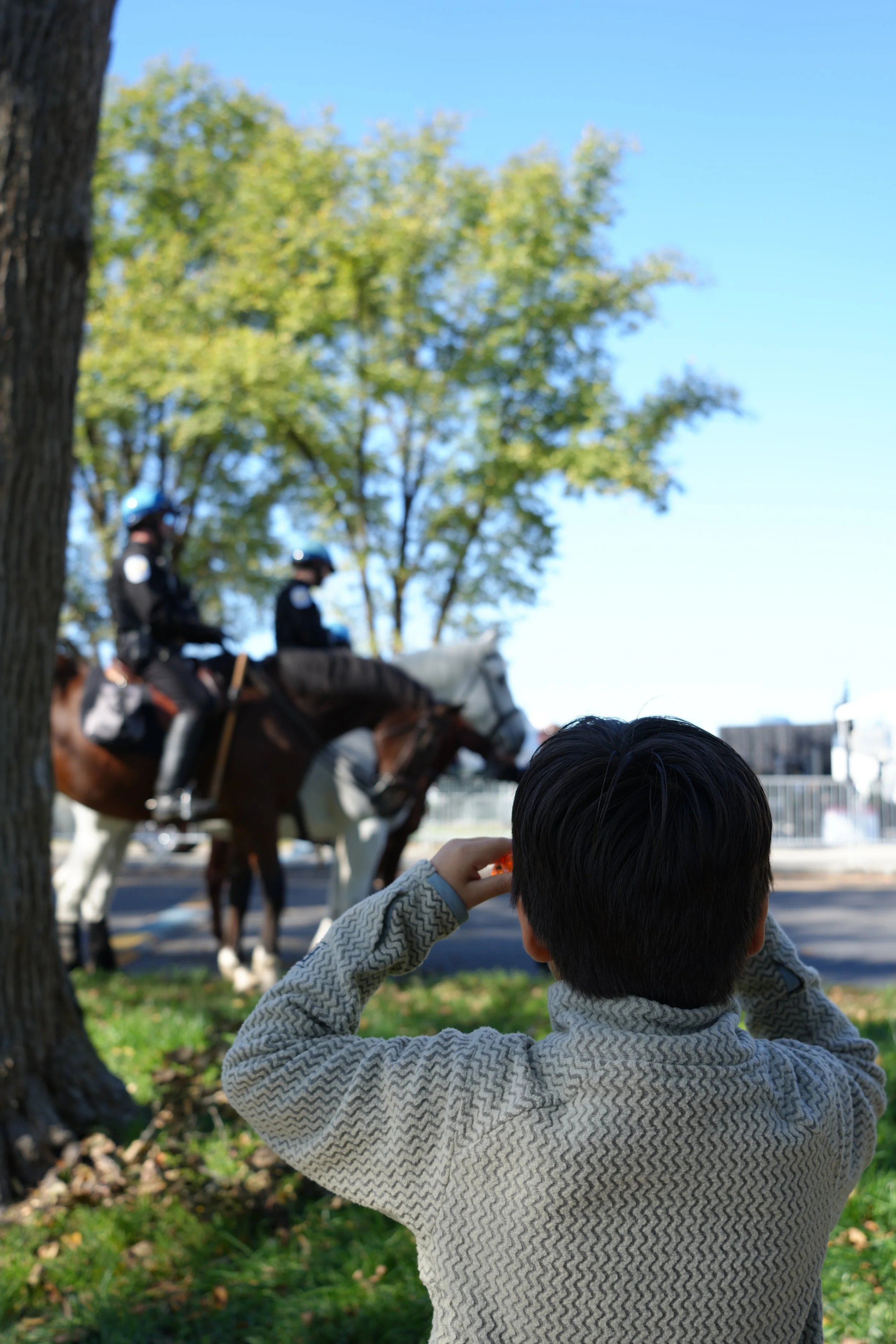
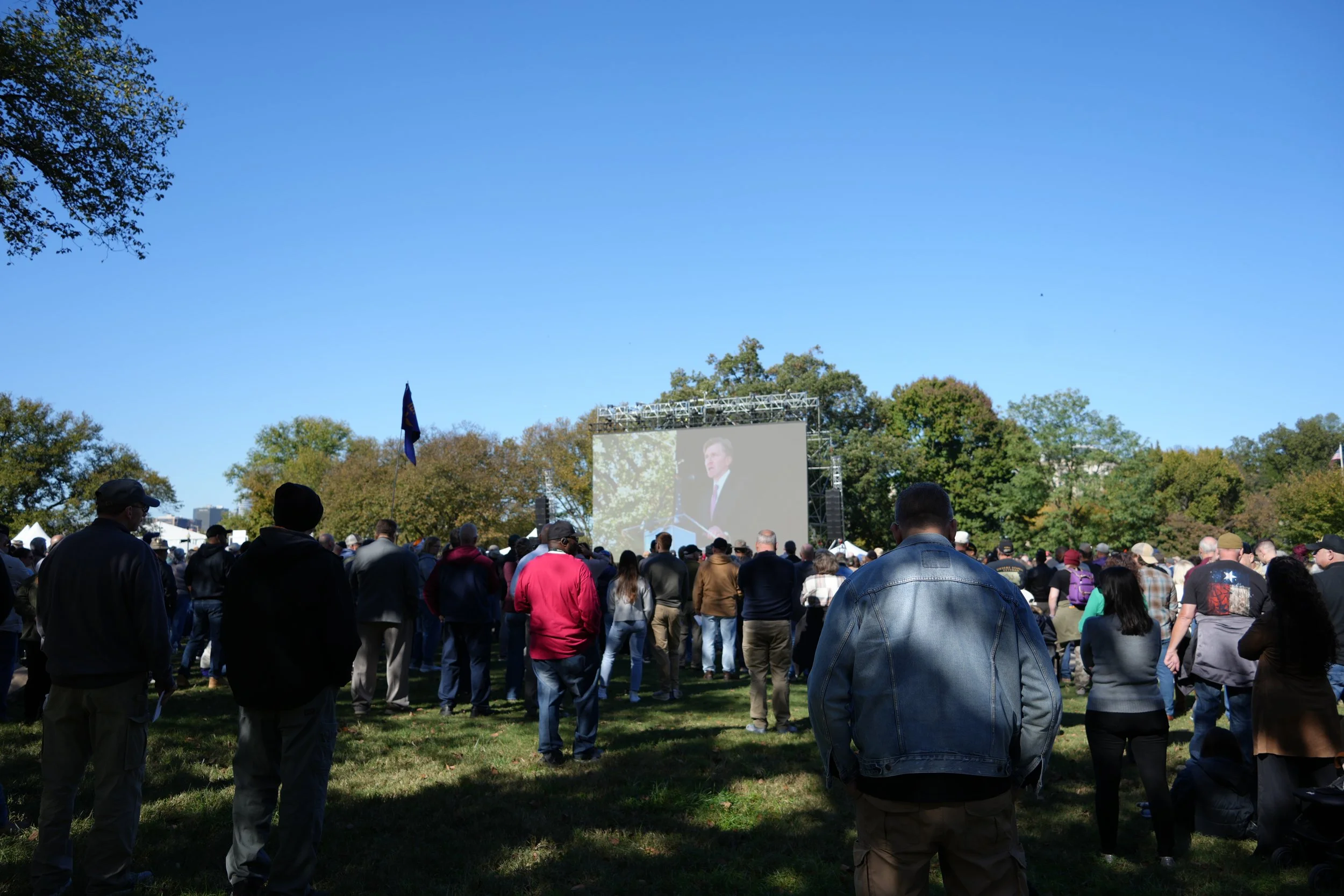
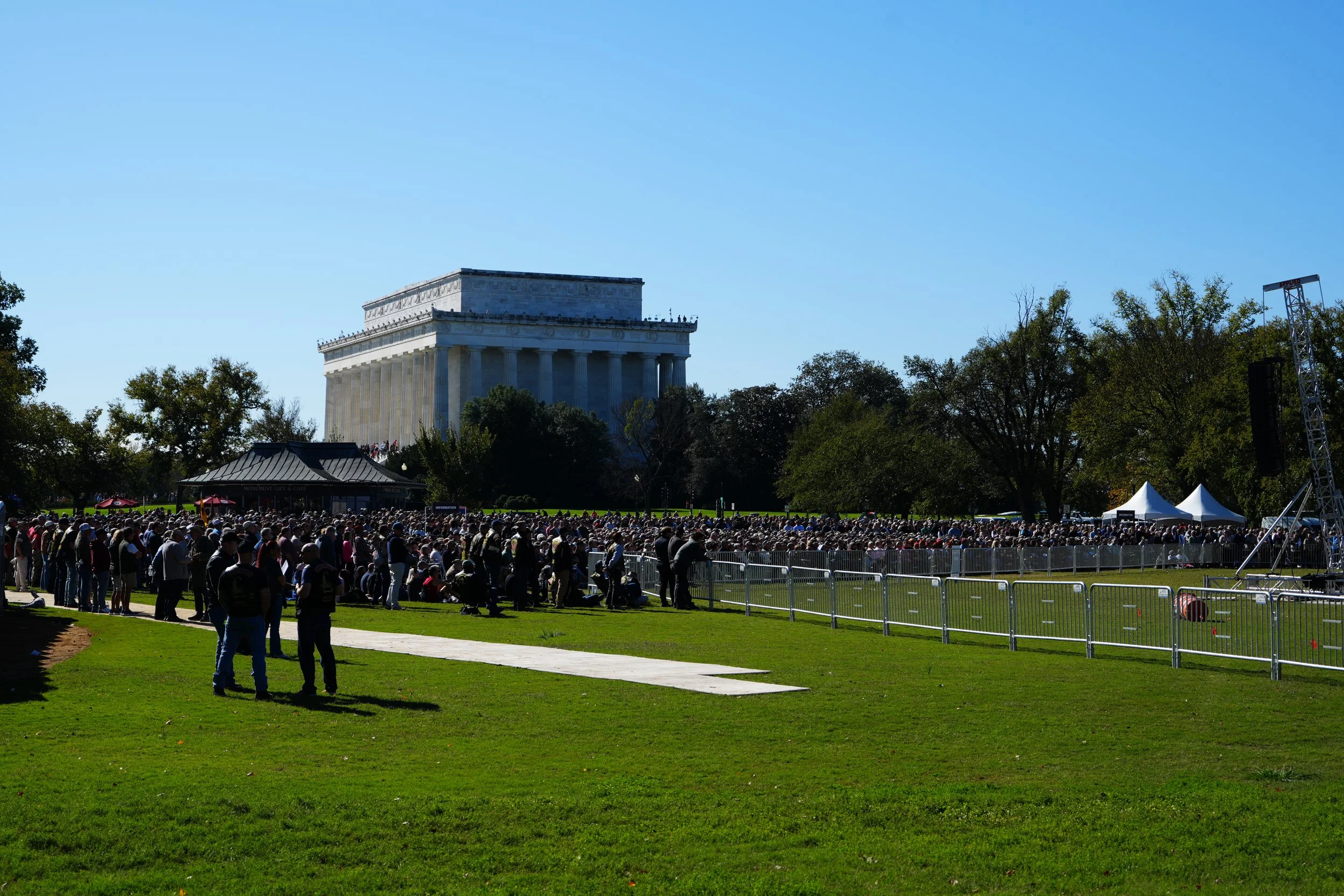
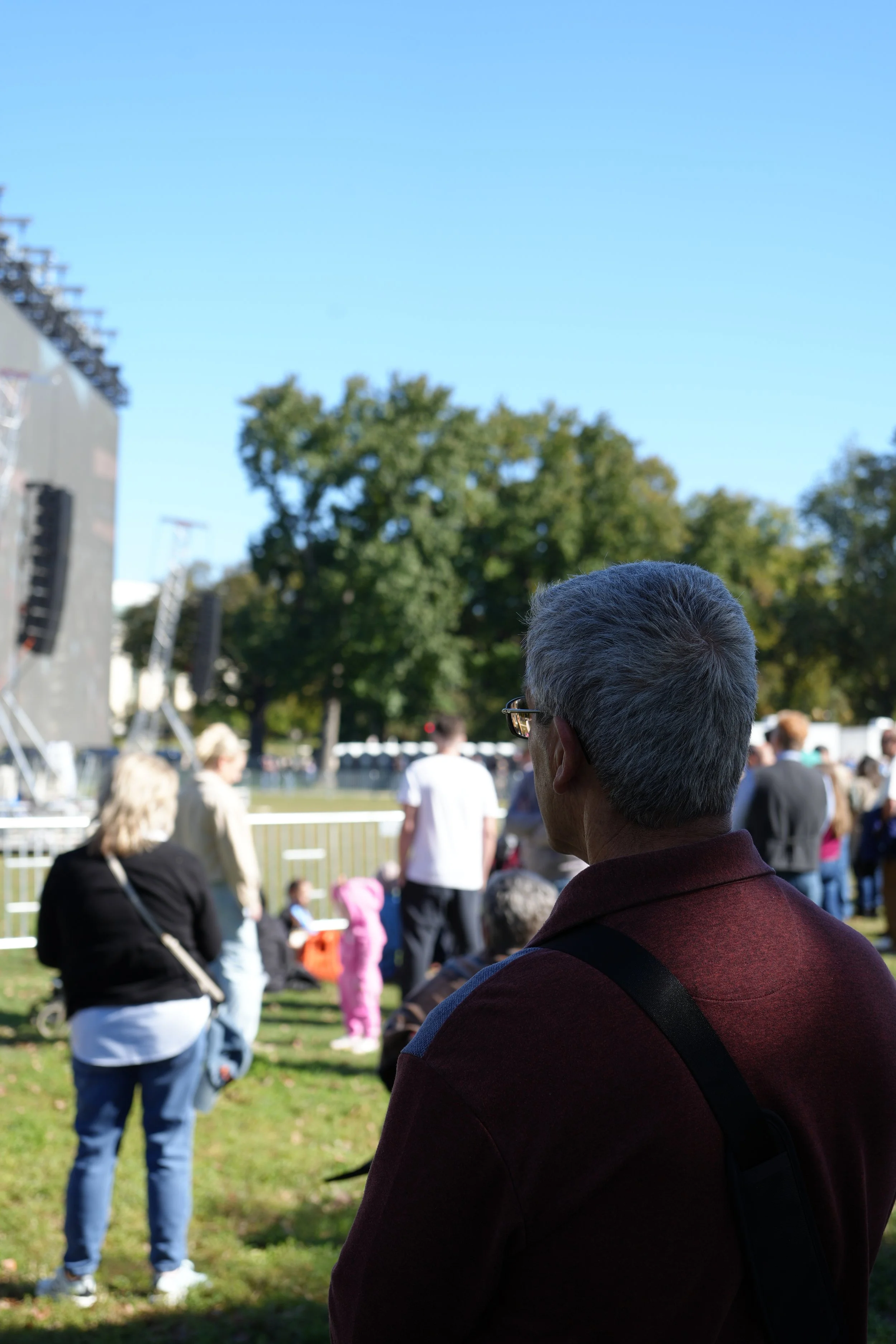
When History Interrupts Someone Else's Routine
As we slowly moved forward, I also noticed the reactions of people passing through the area. Some looked genuinely curious, trying to understand what was happening. Others seemed frustrated by the crowds and the disruption to their usual walking or jogging routes. On more than one occasion, I overheard younger people making comments such as:
"I don't care why there's such a huge line."
"Ugh, there are so many people here."
And, "Another event causing chaos around here."
Of course, these comments do not represent an entire generation. They were individual remarks I personally overheard.
But they stayed with me.
As a journalist, I understand the importance of separating observation from interpretation. My responsibility is to report what happened as accurately and fairly as possible. However, for this particular story, I hope you'll allow me to share a personal reflection.
I Was Born in Mexico. And This Experience Taught Me Something About My Adopted Country.
I was not born in the United States. I am Mexican, and I immigrated to this country approximately 20 years ago in search of better opportunities. I did not grow up studying American history in school, much less the military conflicts in which this country has participated. When the Gulf War took place, I was only nine years old. For much of my life, Desert Shield and Desert Storm were names I knew very little about. But life eventually gave me a different perspective.
I had the blessing of becoming an American citizen, building a family here, and meeting veterans whose personal stories taught me more about this country's history than I could have imagined.
One of those veterans is my father-in-law, Ron.
Listening to his experiences has helped me understand that behind military strategies, historical dates, and newspaper headlines are real people who left their families, faced uncertainty, and risked their lives. I don't believe honoring veterans means we must agree with every military or political decision made by a government. Wars deserve to be studied, questioned, and understood from different perspectives.
But I strongly believe there is an important distinction between debating the decisions that lead to war and recognizing the humanity and sacrifice of those who were called to serve. That is why hearing expressions of indifference during such a meaningful occasion was difficult for me. It also made me wonder whether we, as a society, are doing enough for our veterans after their service ends.
Are they receiving the care and benefits they deserve?
Are their stories being preserved?
Are younger generations learning enough about their experiences?
Or are we slowly allowing their sacrifices to fade from our collective memory?
That morning reminded me that the freedoms and opportunities we enjoy today are part of a complex history shaped by difficult decisions, human sacrifice, and lives forever changed. And understanding that history should matter to all of us.
Ron's Story and the Ten MLRS Launchers
During our visit, my father-in-law shared several memories of his experience during Operation Desert Storm. One story in particular caught my attention.
Ron served with a unit operating the Multiple Launch Rocket System (MLRS), a mobile rocket artillery system used by the U.S. Army. These armored vehicles were designed to launch multiple rockets in rapid succession, delivering concentrated firepower against enemy positions while allowing crews to relocate quickly after firing.
During the Gulf War, MLRS systems played an important role in supporting ground operations and targeting Iraqi artillery and military positions.
As we walked through the new memorial, however, I did not notice any specific information about these systems or the particular operation Ron had described.
That made me curious.
I began researching and discovered a historical article published by Lockheed Martin, the manufacturer of the MLRS, titled MLRS: Thunder in the Desert.
The article describes a significant operation on February 13, 1991, when a battery of ten MLRS launchers was positioned across approximately two miles of desert near the Iraq–Saudi Arabia–Kuwait border region.
According to the company's historical account, the ten launchers fired more than 100 rockets in approximately one minute during an early combat engagement involving these systems. U.S. Army historical accounts also document the role played by MLRS units during the Gulf War.
It is important to clarify that these ten launchers represented one particular battery, not the total number of MLRS systems deployed during the conflict.
What made this story especially meaningful was something Ron told me. According to his recollection, he was responsible for launching rockets from one of those vehicles. And it reminded me of something I had not fully appreciated before. What made this discovery even more meaningful was a photograph featured in the article, capturing the very moment the rockets were launched.
As I showed it to my father-in-law, he looked at the image and said something I will never forget:
“I was there. That was my view.”
Military documents can tell us what happened. But the people who were there can tell us what it felt like.
The Desert Uniforms That Arrived After the Victory
Another story Ron shared made me smile while also revealing something about the realities of military deployment. He told me that his unit was stationed in Germany when they received orders to mobilize to a location that, according to his recollection, was kept confidential at the time. The deployment happened so quickly that they did not have the desert camouflage uniforms we commonly associate with images from the Gulf War.
Instead, they traveled wearing the traditional green camouflage uniforms used by American troops stationed in Europe. According to Ron, the appropriate desert uniforms finally arrived when the military operations were nearly over.
Just in time, he joked, for some of the photographs taken after the victory.
It may sound like a small detail compared with the scale of a war, but I found it fascinating. Even the most sophisticated military operations involve logistical challenges, unexpected circumstances, and moments of improvisation that rarely make it into history books.
Historical records confirm that major U.S. Army units deployed from Germany to the Middle East during Operations Desert Shield and Desert Storm.
But the memories of individual service members reveal another dimension of those movements. I can only imagine how many stories like Ron's remain tucked away in family photo albums, letters, and conversations that never reach the public.
I understand that some military information must remain confidential for security reasons. Still, I hope that as time passes, more records and firsthand accounts become available so future generations can better understand what happened behind the scenes.
Not only the strategies and victories, but also the sacrifices, uncertainty, and human experiences.
The True Meaning of Remembering
I returned from Washington, D.C., with a different perspective. I traveled there to accompany my father-in-law to the dedication of a memorial. I came home with an even deeper appreciation for our veterans and their families. I kept thinking about those gray-haired men and women who patiently waited under the Washington sky.
Those who arrived in wheelchairs.
Those who walked slowly but proudly.
The spouses who endured years of uncertainty.
The children who grew up hearing stories of a war they may never fully understand.
And those who are no longer here to witness this recognition.
I do not believe war should be romanticized. Every armed conflict leaves behind loss, suffering, and consequences that deserve to be remembered. But I do believe that listening to those who lived through these events is essential. I hope younger generations will take a little more time to learn from our veterans. That when we see an older man or woman wearing a cap that says "Veteran," we might consider asking about their story.
That we remember those wrinkled hands may have carried responsibilities we will never fully comprehend.
And that the next time we encounter an incredibly long line outside a memorial, instead of immediately becoming frustrated by the interruption to our routine, we might ask ourselves what history has brought so many people together.
Because that Saturday, while some saw traffic, barriers, and an inconvenient crowd, I saw something entirely different.
I saw a generation that had waited 35 years for a part of its history to find a permanent place in the memory of its country.
And I had the privilege of standing there alongside one of them.
Thank you, Ron, for sharing your story with me.
And thank you to all veterans and their families for the countless stories we have yet to hear.
Visiting the National Desert Storm and Desert Shield Memorial
The memorial was officially dedicated on October 24, 2026, and is located on the National Mall in Washington, D.C.
Location: Constitution Avenue NW and 23rd Street NW, near the Lincoln Memorial.
Admission: Free.
Official website: https://www.ndswm.org/
National Park Service: https://www.nps.gov/dsds/planyourvisit/index.htm
Historical reference on the MLRS: https://www.lockheedmartin.com/en-us/news/features/history/mlrs.html
Ana Cruz Hollingsworth is an award-winning journalist, producer, and host of The Ana Cruz Show, a platform dedicated to sharing stories that inform, inspire, and connect communities.